
The federal government stated this week that it continues to “advance efforts to become a clean energy superpower.”
A recent effort in this vein hails from Tim Hodgson, who serves Canada as Minister of Energy and Natural Resources.
Hodgson this week earmarked over $4.5 million through the Clean Energy for Rural and Remote Communities program to support projects that generate electricity and heat from water, biomass, solar, or otherwise renewable sources.
Launched in 2018 and recapitalized in 2021, the CERRC program has invested $453 million to reduce primarily targets rural and remote indigenous communities that still rely on diesel for energy.
“We are not only reducing reliance on diesel but also creating opportunities for economic growth and self-determination,” says Hodgson.
CERRC has thus far supported 230 projects nationally.
“Investments like these improve energy reliability, create good local jobs, and advance community priorities,” agreed Minister of Indigenous Services Mandy Gull-Masty.
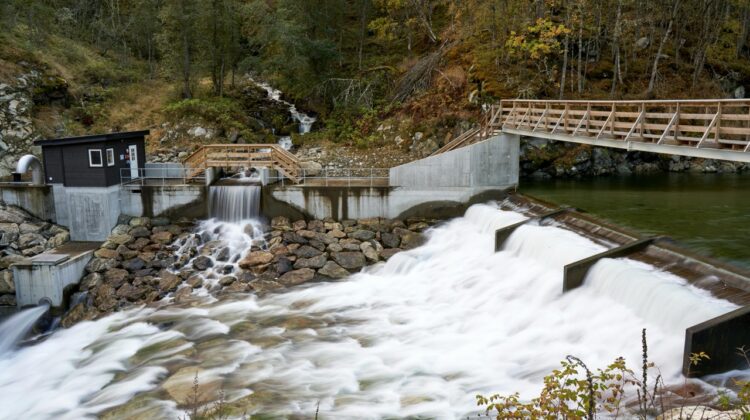
Funding for projects includes $1.1M for the 350-kW run-of-river Padakus Hydropower Project situated two kilometres west of Gwa’yi village, as well as $1M for the TYE Clean Energy Capacity Building Initiative, which supports the Skidegate Band Council and Old Massett Village Council in developing a local clean energy system.
In Haida Gwaii, a solar and energy storage project is receiving $1.25M to increase the region’s power supply quality and reliability.
In Massett, $450K for the “Northern Hospital District Energy Project” will see the installation of a 390-kW Viessmann biomass boiler to supply renewable heat and hot water to the Northern Haida Gwaii Hospital and Health Centre.
And the Mowachaht and Muchalaht First Nations will complete regulatory and site work for a wave energy project in Yuqot with over $100K in support, while the Daylu Dena Council attracted more than $300K for the Tu Netset Geothermal Project to test drilling plans around the Lower Post region.