

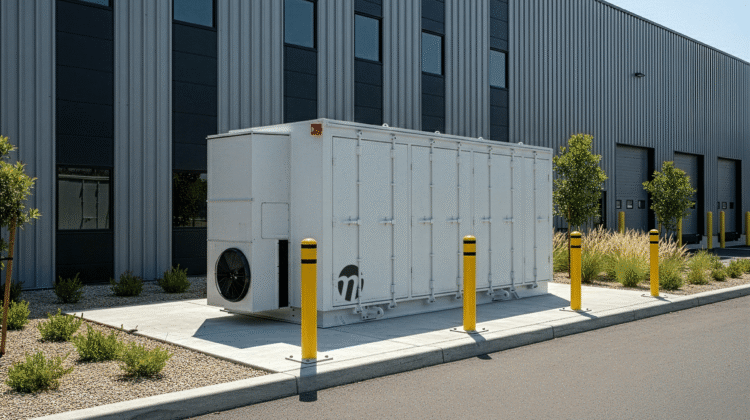
Moment Energy has become the first battery energy storage system provider with non-Prohibited Foreign Entity status in North America to achieve full Foreign Entity of Concern compliance backed by a third-party legal review.
The Vancouver cleantech company said the review covered its new U.S.-focused battery energy storage system, as well as Moment’s corporate ownership, effective control and debt-financing structure. It was conducted by an unnamed top-10 U.S. law firm.
The milestone arrives as new American rules place greater scrutiny on the foreign-linked supply chains underpinning the country’s battery storage buildout.
The One Big Beautiful Bill Act tightened FEOC and PFE requirements for companies seeking federal Investment Tax Credits. The U.S. Treasury has since issued interim guidance through Notice 2026-15, with further clarification expected as implementation continues.
Moment says non-compliance could cost a project its tax credit and potentially expose it to clawbacks during a 10-year recapture period.
“Investment Tax Credit eligibility is fundamental to successful U.S. project economics,” said James Brady, vice-president of finance at Moment Energy.
Rather than relying entirely on newly manufactured batteries, Moment reengineers retired electric vehicle batteries already in North America for stationary energy storage. The approach extends the useful life of EV batteries while reducing reliance on foreign-linked supplies of newly manufactured cells.
Moment’s new system is also integrated with FEOC-compliant power-conversion equipment. The company says it is structuring its North American supply chain to meet increasingly stringent Material Assistance Cost Ratio requirements through 2030.
Moment has also submitted formal comments on the new rules and met with U.S. Treasury officials to offer an industry perspective on their implementation.
The compliance milestone follows a period of rapid expansion for the Canadian company. As CleanEnergy.ca reported in June, Moment recently opened its Megafactory in Surrey, which is expected to support one gigawatt-hour of annual battery storage production by 2030.
Moment is also planning a gigafactory in Taylor, Texas, backed by a US$20.3-million award from the U.S. Department of Energy.
With manufacturing planned on both sides of the border, Moment is positioning its second-life battery technology as a more domestic and resilient storage option for American data centres, hospitals, factories and microgrids.
For developers navigating the new rules, the company’s independent compliance review is intended to provide greater certainty that projects using Moment’s systems can preserve access to valuable federal tax incentives.