

A new report from cleantech accelerator Foresight suggests Canada could slash emissions, strengthen energy security, and lower costs by capturing and reusing waste heat that is currently lost from industry, buildings, and urban infrastructure.
The Waste Heat Recovery & Thermal Storage: Technology Landscape Study, produced by Inform Energy Solutions and funded by the BC Net Zero Innovation Network and the Zero Emissions Innovation Centre (ZEIC), highlights how underused local heat sources could become reliable energy inputs when paired with district energy systems (DES) and thermal energy storage (TES). Globally, McKinsey estimates the opportunity could unlock as much as €140 billion in annual savings.
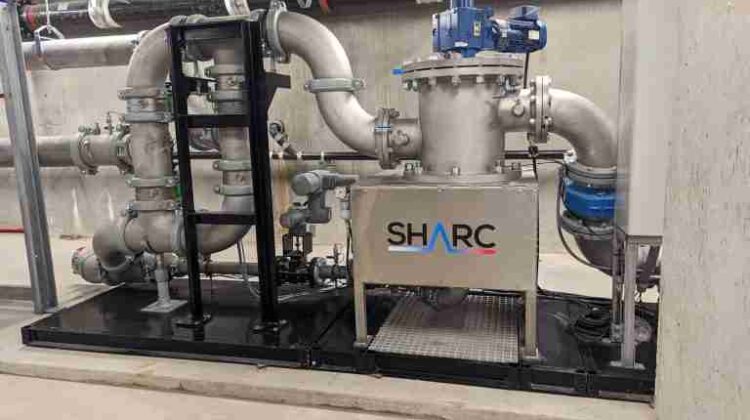
While many waste heat recovery technologies are developed abroad, Canadian companies are making their mark. Vancouver-based SHARC Energy has pioneered raw sewage heat recovery systems, Vitalis has developed CO₂ high-temperature heat pumps, Combustion & Energy Systems offers flue gas economizers, and CIMCO provides industrial-scale heat pump solutions.
The study also incorporates research from students at York University’s Schulich School of Business, who examined the business case for wastewater energy transfer systems in district energy networks. Their findings point to significant financial, environmental, and operational benefits.
Metro Vancouver is emerging as a North American leader in district energy. Modern DES systems can tap unconventional sources—such as sewage, cooling systems, data centres, and flue gas—while TES helps shift energy demand, reduce peak loads, and improve grid resilience.
The report calls for a series of next steps, including:
- Demonstrating local waste heat sources in Metro Vancouver to serve heating and cooling demand in denser urban areas.
- Preparing GIS-based thermal mapping to match supply with demand and guide energy planning.
- Working with BC Hydro to integrate DES and TES as tools for easing grid constraints.
By scaling up local projects and strengthening partnerships, the study suggests Canada could build a stronger foundation for low-carbon district energy systems that reduce emissions while supporting long-term economic growth.
Download the report here.