

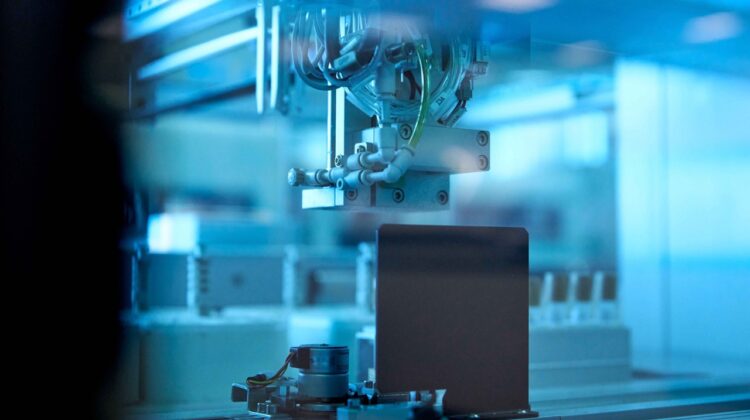
HydroGraph Clean Power announced this month that it has commenced construction of two additional Hyperion graphene reactors.
The Vancouver-based clean technology company says that each of the two new reactors, expected to be commissioned in February, boast an expected production capacity of 10 tons per year of HydroGraph’s FGA-1 ultra-pure fractal graphene using the company’s proprietary explosion-synthesis process.
“These additional Hyperion reactors represent another step forward in building scalable, repeatable production capacity for ultra-pure graphene,” remarked HydroGraph chief executive officer Kjirstin Breure, who says the move is “a critical step for advancing our graphene’s adoption in large-scale manufacturing applications.”
The units are being constructed in Kanas—where patented technology sparked HydroGraph—before heading to Texas.
The company says that commissioning the reactors prior to permanent installation allows for controlled validation, performance testing, and process optimization.
“By deploying identical reactor systems, we continue to validate the consistency of our process while expanding our ability to meet customer demand as we progress through 2026,” Breure stated.
Graphene is 200 times stronger than steel yet, at just one atom thick, remains flexible and stretchy.
Graphene can also conduct electricity at 1000 times the capacity of copper, with electrons moving through the material at nearly light speed. In addition, graphene is impermeable, which means hydrogen atoms cannot penetrate its structure.
These various properties grant graphene a wide range of potential energy-saving applications, from more efficient versions of rubber and concrete to water purification systems and hydrogen fuel cells.
Indeed, the material is so versatile that graphene, posits HydroGraph, “may have as much impact on this world as oil has had,” suggesting that “the number of applications that can benefit from graphene is limitless.”
HydroGraph launched in 2017.