

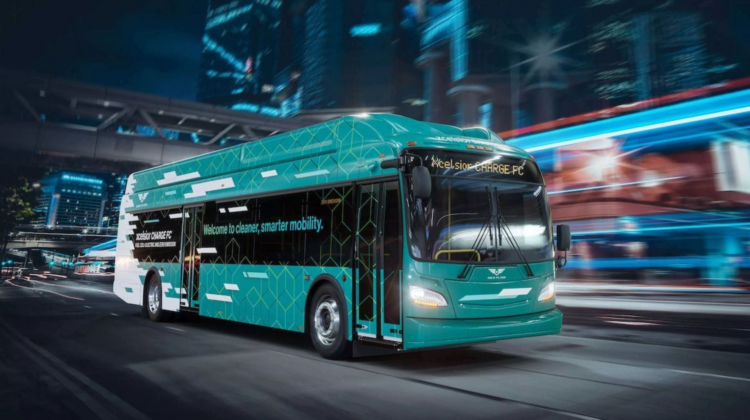
Vancouver’s Ballard Power Systems has signed a significant commercial agreement with bus manufacturer New Flyer to supply 500 hydrogen fuel cell engines, marking one of the largest fuel cell procurement deals in the global transit sector.
The agreement covers Ballard’s FCmove®-HD+ fuel cell engines, representing 50 megawatts of generating capacity. Deliveries will begin in 2026 and power New Flyer’s Xcelsior CHARGE FC™ hydrogen fuel cell buses deployed across North America.
The order is the largest single commitment New Flyer has made since partnering with Ballard more than a decade ago and reflects accelerating demand for zero-emission transit solutions.
Hydrogen fuel cell buses convert hydrogen into electricity through an electrochemical process, emitting only water vapor. The technology enables longer driving range, fast refueling, and operational flexibility comparable to diesel buses, making it particularly attractive for high-utilization transit fleets.
“We are proud that New Flyer continues to place their trust in Ballard as their long-term technology partner,” said Oben Uluc, Ballard’s Vice President of Sales & Marketing. “Our fuel cell engines, backed by additional fleet services, deliver the range, rapid refueling, and reliable performance New Flyer’s fleets require.”
New Flyer says hydrogen buses powered by Ballard systems have already proven their reliability across diverse climates and operating environments throughout North America.
“Over the last decade we’ve delivered buses powered by Ballard in multiple jurisdictions from coast to coast, showing their capability to operate in different environments and routes as a one-for-one diesel replacement,” said David White, Executive Vice President of Supply Management at New Flyer. “With growing demand for fuel cell buses, we are excited to continue this partnership as we support the transition to zero-emission transportation.”
Ballard-powered fleets now include more than 2,200 fuel cell buses worldwide, which have collectively logged over 250 million kilometres. The company reports 98 percent fleet availability and zero reported safety incidents.
In addition to propulsion systems, Ballard is expanding lifecycle support through its Fleet Services offering, which includes technical training, maintenance support, parts supply, operational monitoring, performance analytics, and fuel cell stack servicing.
As cities and transit agencies accelerate decarbonization plans, hydrogen fuel cell buses are emerging as a key pillar of zero-emission fleet strategies alongside battery-electric platforms, particularly for heavy-duty and long-distance applications.