

Cement is essential to modern infrastructure—and one of the world’s most difficult industries to decarbonize.
Calgary-based Carbon Upcycling is tackling that challenge by transforming captured carbon dioxide and industrial byproducts, including slags, ashes, tailings, and glass, into lower-carbon materials that can be used in existing cement manufacturing processes.

The company has already produced more than 3,000 tonnes of low-carbon cementitious material through its Alberta demonstration facility, while attracting strategic backing from major industry players such as CRH Ventures, Cemex Ventures, and TITAN Group. Its Carbon 1 Mississauga project represents the next stage of commercialization, integrating carbon utilization technology into existing cement infrastructure.
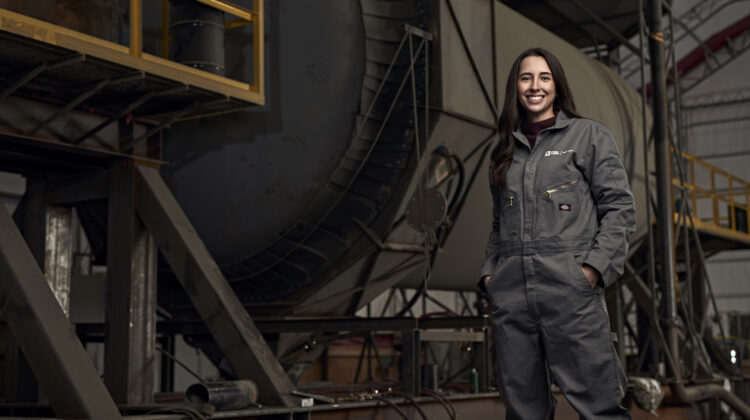
CleanEnergy.ca spoke with Madison Savilow, Director of Marketing at Carbon Upcycling, about communicating a complex climate solution, earning trust in a risk-sensitive industry, and why waste, captured carbon, and domestic supply chains could play a larger role in the future of construction.
Carbon Upcycling sits at the intersection of carbon capture, waste reduction, and low-carbon construction. From a marketing perspective, how do you explain that story in a way that resonates with customers, investors, governments, and the general public?
MS: At its core, Carbon Upcycling is helping decarbonize one of the world’s largest and most essential industries. Our technology transforms captured CO₂ and locally available industrial byproducts into low-carbon cementitious materials that can be used in existing manufacturing processes. The message resonates because it’s a practical climate solution. We’re reducing emissions, creating value from underutilized resources, strengthening domestic supply chains, and helping industry produce lower-carbon building materials at scale.
Cement is one of the hardest industries to decarbonize, but it is also essential to modern infrastructure. How do you balance the urgency of reducing emissions with the reality that the world still needs to build?
MS: The reality is that the world cannot meet its infrastructure needs without cement, but it also cannot meet its climate goals without reducing cement-related emissions. We believe the solution is enabling both sustainability and growth. Carbon Upcycling works with existing industry to lower the carbon intensity of cement production while maintaining the performance, reliability, and scale the construction sector depends on.
Your technology turns industrial byproducts such as slags, ashes, tailings, and glass into low-carbon cement materials. How important is the circular economy story to Carbon Upcycling’s brand and customer conversations?
MS: The circular economy is foundational to our approach. We see industrial byproducts as valuable resources that can play a meaningful role in building a lower-carbon future. By enhancing the performance of these materials with captured CO₂, we’re helping divert waste, reduce reliance on carbon-intensive raw materials, and create a more resilient supply chain. It’s a story that resonates because it delivers environmental and economic value at the same time.
Carbon Upcycling’s commercial demonstration facility in Alberta has produced more than 3,000 tonnes of low-carbon cementitious material for homes, paths, and roads. What have those real-world deployments taught you about building trust in new climate technologies?
MS: One of the biggest lessons is that trust is earned through execution. Customers want to see technologies perform in real-world conditions, not just in a lab. Our commercial demonstration projects have shown that lower-carbon materials can meet the performance and quality standards the construction industry expects. Demonstrating tangible results is what helps move innovation from curiosity to adoption.
With Carbon 1 Mississauga expected to become operational in 2026, what does that milestone represent for Carbon Upcycling and for Canada’s clean manufacturing ambitions?
MS: Carbon 1 represents an important step in the commercialization of our technology. It demonstrates how carbon utilization can be integrated into existing cement manufacturing infrastructure to deliver emissions reductions at scale. More broadly, it highlights Canada’s opportunity to lead in industrial decarbonization by developing and deploying homegrown technologies that strengthen manufacturing competitiveness while supporting climate goals.
Carbon Upcycling has attracted strategic backing from major cement players including CRH Ventures, Cemex Ventures, and TITAN Group. How does industry validation change the way you tell the company’s story?
MS: Industry validation reinforces that meaningful decarbonization requires collaboration across the value chain. Working with some of the world’s leading cement producers demonstrates that our technology addresses real industry challenges and can fit within existing operations. It also signals that the sector is actively seeking scalable solutions to reduce emissions and secure supply of critical building materials, which gives customers, partners, and investors greater confidence in the path to adoption.
Many clean technologies face a gap between technical success and market adoption. What are the biggest communication challenges when asking conservative, risk-sensitive industries like cement and construction to adopt something new?
MS: The biggest challenge is that customers are ultimately responsible for delivering safe, durable, and reliable infrastructure. Sustainability benefits are important, but they cannot come at the expense of performance. That’s why our conversations focus on demonstrated results, operational compatibility, and commercial value. Adoption happens when customers can clearly see that a solution lowers emissions while meeting the standards and expectations they already have.
Looking ahead, what would success look like for Carbon Upcycling over the next few years—not just in terms of facilities and tonnes produced, but in how the construction industry thinks about waste, carbon, and domestic supply chains?
MS: Success would mean accelerating the transition to a more circular and lower-carbon construction industry. We want to see industrial byproducts increasingly recognized as valuable feedstocks, captured carbon viewed as a resource rather than a waste stream, and local supply chains strengthened through innovative manufacturing approaches. Ultimately, success is helping make lower-carbon cement and concrete the industry standard rather than the exception.