

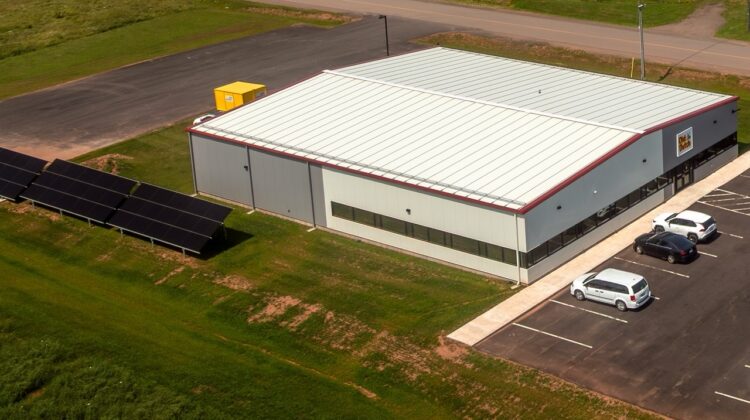
Old Dutch Foods is setting a high standard for energy-efficient operations on Prince Edward Island.
The venerable food manufacturer, founded in Minnesota in 1934, has opened an accounting office and warehouse facility in Slemon Park in Summerside.
It is not the most architecturally impressive building in the country, but the structure boasts a slew of clean energy implements.
Old Dutch, which expanded to Canada in 1954, says that its new facility marks a “significant investment in the future of its Atlantic Canadian operations and its commitment to responsible business practices.”
The company’s new space spans more than 8,000 square feet and integrates a range of technologies oriented around minimizing environmental footprints.
This includes a solar array, geothermal heating and cooling, and an Energy Recovery Ventilation system.
The solar system features an array spanning 160 metres and is expected to generate approximately 40 kilowatts of power.
The geothermal system utilizes 16 boreholes connected through a vertical closed-loop heat exchange setup that transfers energy between the ground and the building year-round.
And the Energy Recovery Ventilation system captures energy from exhausted air and uses it to temper incoming fresh air, which improves air quality while lowering energy demands for temperature regulation.
The building uses no fossil fuels and release zero carbon dioxide into the atmosphere, according to a statement.
“Quality has always been at the heart of Old Dutch Foods, and that commitment extends beyond the products we make to the investments we make in our people, our operations, and our future,” says Scott Kelemen, Sr. National Director Brand and Market Strategy at Old Dutch Foods.
“As we look ahead to the next generation of Canadians who will enjoy our products, we are proud to invest in innovative technologies and infrastructure that help us operate more efficiently and responsibly for generations to come,” Kelemen remarked.
Kelemen says that the new facility in Canada builds on the company’s broader commitment to environmental responsibility, which includes investing in waste reduction and resource recovery initiatives such as biological wastewater treatment technology, recycling programs, and the diversion of food waste.