
Named one of CleanEnergy.ca’s 10 Canadian Clean Energy Startups to Watch in 2026 and recognized by Foresight as BC Cleantech Startup Venture of the Year in 2025, Green Manganese Technologies is reporting fresh progress in turning industrial waste into valuable metals.
The B.C.-based company has completed initial trials recovering manganese and zinc from smelter sludge while sharply reducing toxic contamination in the remaining solids—a potential pathway to turn a steelmaking supply chain’s waste problem into a source of critical minerals.
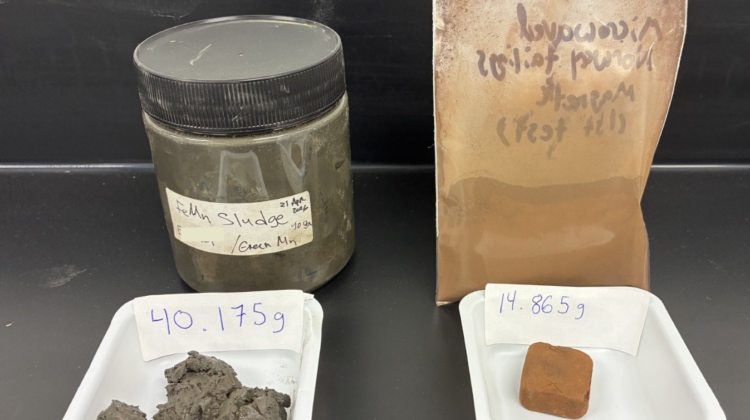
In its latest trials, Green Manganese processed sludge collected from a European ferromanganese smelter’s gas-cleaning system. According to the company, independent testing by ALS Canada found that treatment reduced concentrations of toxic compounds known as polycyclic aromatic hydrocarbons (PAHs) by more than 99.97% in the remaining solids.
The untreated material contained approximately 30% manganese and 6% zinc. The company reported high-yield manganese recovery alongside zinc extraction, although it did not disclose specific recovery percentages for the campaign.
For ferroalloy producers, the technology aims to address two connected challenges: managing hazardous residues that accumulate in settling ponds and recovering metals that would otherwise remain trapped in those deposits.
Processing also separated cadmium and lead into controlled streams for further management, while removing potassium and sodium from the solid residue. Green Manganese said the initially alkaline sludge was converted into stable, near-neutral solids suitable for engineered backfill applications.
The company is developing modular systems for deployment at smelters, allowing operators to process both newly generated sludge and historical deposits on-site. Its process includes a circuit designed to recirculate solutions and eliminate wastewater discharge.
Beyond waste treatment, Green Manganese is designing its platform to upgrade recovered manganese into pellets containing more than 68% manganese. Those pellets are intended to blend into existing furnace charges without major equipment changes.
The company says the higher manganese concentration and lower content of unwanted minerals could reduce slag generation, energy consumption, and direct carbon emissions during smelting. Industrial qualification of the recovered pellets remains part of its upcoming work.
The announcement builds on earlier test results covered by CleanEnergy.ca in September, when Green Manganese reported recovering more than 90% of manganese, nickel, cobalt, and copper from polymetallic nodules through a single integrated process. The latest campaign applies its technology to a different feedstock: waste already generated by industrial operations.
Next, the company plans scaled-up trials to optimize manganese extraction, refine recovery of additional metals, and qualify its pellets for industrial smelting applications.