

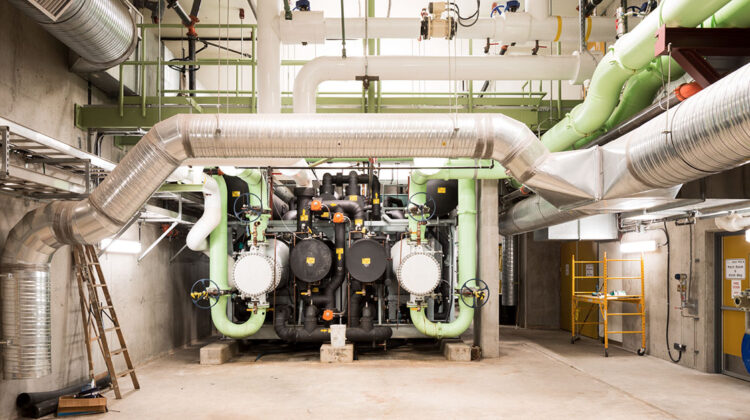
Massive amounts of heat released daily from buildings, infrastructure, and industry could become a cornerstone of Canada’s clean energy transition, according to a new report from Foresight Canada.
The study, Unlocking the Business Case for Wastewater Energy Transfer (WET), outlines how tapping into the thermal energy carried in sewage and wastewater can provide reliable, low-carbon heating and cooling for urban centres. When paired with District Energy Systems (DES), WET technologies promise both environmental and financial benefits.
“Wastewater energy is one of the most underutilized clean energy resources we have,” the report notes. “The business case is strong, and adoption makes sense for municipalities, developers, and utilities alike.”
The report, developed with students from the Schulich School of Business, highlights potential greenhouse gas reductions of up to 80–90% compared to natural gas–based systems when used alongside clean electricity grids. Return on investment is achievable in as little as three to seven years, particularly in jurisdictions with high energy costs or supportive policy frameworks.
Real-world examples already exist. Vancouver’s Neighbourhood Energy Utility has reduced emissions by more than 60% while supplying reliable energy to new developments. The report points to such successes as proof that WET can scale across Canadian cities.
Beyond the financial case, the study examines regulatory environments, funding opportunities, and barriers to adoption—including financing hurdles and the need for stronger community engagement. Recommendations include integrating WET into municipal planning and leveraging innovative financing models.
This report builds on Foresight’s earlier Waste Heat Recovery & Thermal Storage Technology Landscape Study, which mapped market-ready technologies across Canada. Together, the two studies provide both a technical overview and a business rationale for capturing wasted heat and turning it into low-carbon energy.
“Municipalities, utilities, and developers are on the front lines of Canada’s net-zero transition,” the report concludes. “Wastewater Energy Transfer offers them a proven, scalable path to cut emissions, lower costs, and build resilient urban energy systems.”